Download Original PDF
Get the official Barkatullah University print version scanned document.
🤝 Help Your Juniors!
Have previous year question papers that aren't on our website? Help the next batch of students by sending them to us! With your consent, we will proudly feature your name as a Top Contributor on our platform.
Submit Papers 📩(i) The correct order of coordination number in BCC, F
and HCP unit cells is :
- 12, 8, 6
- 8, 12, 12
- 6, 8, 12
- 12, 8, 24
(ii) A cation vacancy and an anion vacancy in a crystal of
type AB is called :
- Schottky Defect
- Frenkel Defect
- Pair of vacancies
- None of theses
(iii) On cooling the of two miscible molten metals solidifies
separate solid phases, the Reaction is known as :
- Eutectic
- Eutectoid
- Peritectic
- Peritectoid
(iv) Annealing temperature is :
EW-60
B.E. IIIrd Semester (New Scheme) Mech. Engg.
Examination, 2021-22
Engineering Materials & Metallurgy
Paper - M - 304
Time : 3 Hours]
[Maximum Marks : 60
Note :-Attempt all the questions. All questions carry equal marks.
neat & clean well labeled diagrams.
1. Give the correct Answer :
- Same as normalizing temperature
- Greater than normalizing temperature
- Less than normalizing temperature
- Sometimes greater and sometimes less than normal izing temperature
(v) 100% pearlite phase in steel is found at :
- at more than 0.8% Carbon concentration
- at 0.8% Carbon concentration
- at less than 0.8% Carbon concentration
- None of the above
(vi) Which of the following is a point defect in crystals ?
- Edge dislocation
- Interstitials
- Grain boundaries
- Cracks
(vii) Which of the following is a point defect in crystals ?
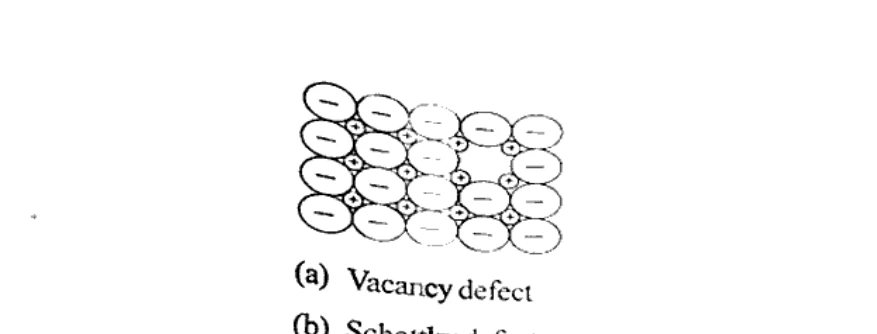
- Vacancy defect
- Schottky defect
- Frankel defect
- Interstitial defect
(viii) Annealing temperature is :
- Same as normalizing temperature
- Greater than normalizing temperature
- Less than normalizing temperature
- Sometimes greater and sometime less than norma ing temperature
(ix) A metal which crystallizes in more than one structure
- Amorphous
- Polymorphic
- Alotropic
- Polytropic
(x) 100% pearlite phase in steel is found at :
- at more than 0.8% Carbon concentration
- at 0.8% Carbon concentration
- at less than 0.8% Carbon concentration
- None of the above
(a) Give comparison of Edge and Screw dislocations.
(b) Define the term "Solidification of metals" and write the
steps involved in the solidification process.
OR
(a) Define the following :
- Space Lattice
- Burger vectors
- Crystal Growth
(b) What is "Miller Indices"? How are they represented ?
(a) Define the following :-
- Tie Line
- Gibb's Phase rule equation
(b) Distinguish between :
- Eutectic and Eutectoid transformation
(ii) Peritectic and peritectoid transformation.
OR
(a) Draw the neat and labelled diagram of Eutectoid system
along with the reaction.
- involved and examples.
- How can you interpret a phase diagram ?
4. (a) With the help of suitable diagram, explain the process of
martempering. How it doesdiffer from annealing ?
(b) Explain Iron-Carbon phase diagram with various trans
formations and reactions.
OR
(a) Differentiate between :
- Full Annealing and Process Annealing
- Austempering and Martempering
(b) Explain the construction and limitations of TTT diagrams.
5. (a) Explain the structure, properties and applications of the
following :
- Fe-Fe3C system alloys
- Al-Cu system alloys
(b) Discuss the principles, limitation and specific application
of Eddy Current testing process.
OR
(a) Explain briefly Magnetic particles inspection testing with
its advantages and limitations.
(b) Briefly describe the properties and applications of Raze
Metals.
6. Explain the following :
- Behaviour of Glass
- Application of composite materials
- Methods of Powder making
- Application of powder metallurgy
OR
(a) What is polymerization ? Explain the characteristics of
polymers in brief.
(b) What is Sintering ? Explain the different methods of sin
tering.